
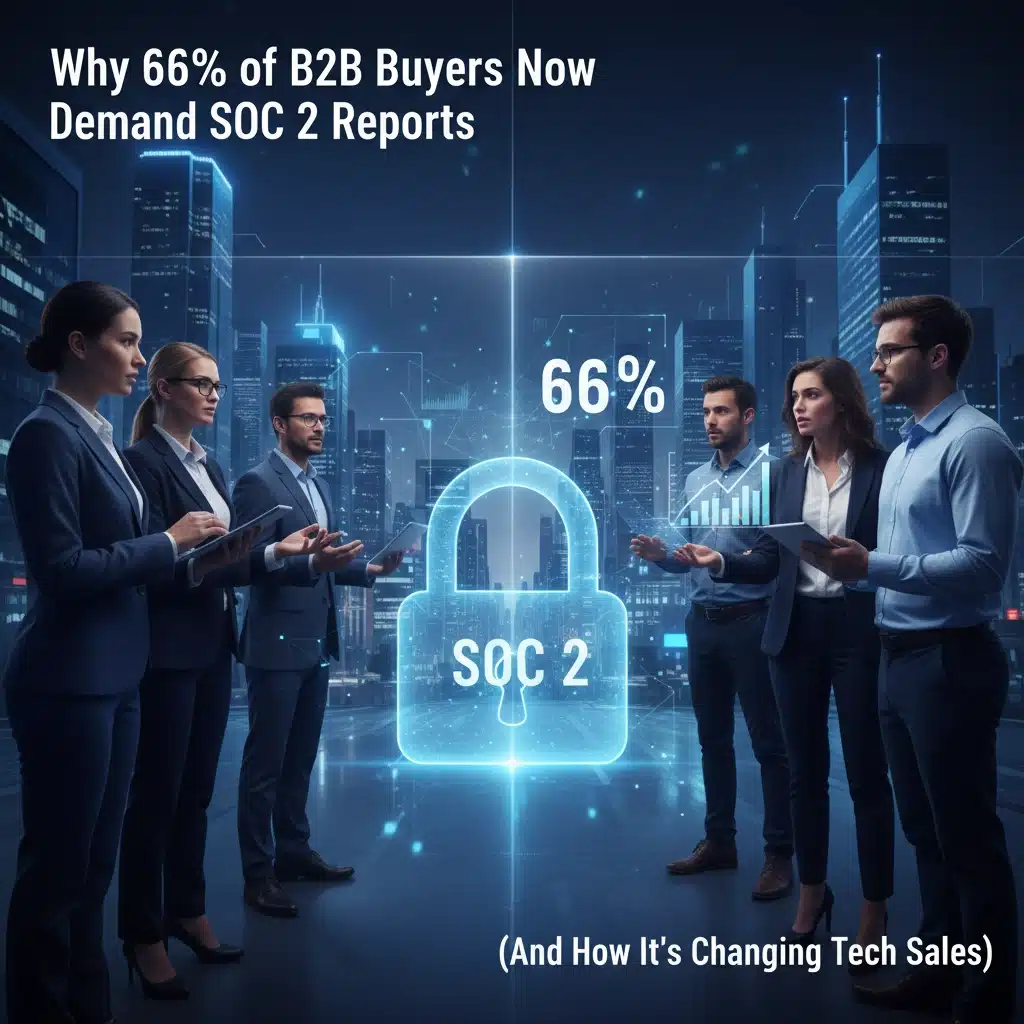
The B2B sales landscape has undergone a dramatic transformation. What was once a relationship-driven process has evolved into a verification-heavy journey where security compliance isn’t just preferred: it’s mandatory. While specific statistics on SOC 2 demand vary by source, the trend is undeniable: enterprise buyers are increasingly requiring comprehensive security documentation before they’ll even consider a vendor partnership.
This shift represents more than just heightened security awareness. It reflects a fundamental change in how businesses evaluate risk, make purchasing decisions, and protect their stakeholders. For tech companies, understanding and adapting to this new reality isn’t optional: it’s essential for survival in an increasingly competitive marketplace.
The New B2B Buying Reality: Verification Over Relationships
Recent research reveals that 77% of B2B buyers now describe their purchase experience as extremely complex or challenging. This complexity stems from a significant behavioral shift: buyers spend approximately 70% of their journey conducting independent research before engaging with vendors.
Gone are the days when a strong sales relationship could carry a deal across the finish line. Today’s procurement processes involve 6 to 10 stakeholders, each bringing specific requirements and concerns to the table. More telling, over 20% of businesses now involve six or more people in their buying decisions: a clear indication that security and compliance considerations have become organizational priorities rather than departmental concerns.
This expanded decision-making structure has practical implications. The average decision timeline has increased by 54 days between 2021 and 2024, reflecting the thorough due diligence now standard in B2B transactions. For tech vendors, this means security credentials must be readily available and easily understood by diverse stakeholders who may not have technical backgrounds.
What’s Driving the Demand for SOC 2 Compliance?
Interconnected Business Ecosystems
Modern B2B operations rely on intricate networks of interconnected systems. Customer data flows through CRMs, marketing automation platforms, partner management tools, and integration services. Each connection point represents a potential vulnerability, making comprehensive security frameworks essential.
A single weak link can compromise entire networks, exposing sensitive information and disrupting business operations. This reality makes SOC 2 compliance critical not only for individual companies but for their entire ecosystem of partners and vendors.
Rising Financial Stakes
The financial implications of security breaches continue to escalate. While large enterprises face average breach costs of $4.24 million, even small and medium businesses encounter significant exposure, with minimum costs starting at $17,000: excluding reputational damage and long-term business impact.
These figures don’t capture the full scope of risk. Regulatory penalties, customer churn, and competitive disadvantage can multiply the actual cost of security incidents well beyond immediate remediation expenses.
Economic Pressures Intensifying Scrutiny
With 65% of buyers reporting tighter budgets compared to previous years, procurement decisions face increased scrutiny. Budget consciousness, combined with heightened security awareness, means that demonstrable security standards like SOC 2 compliance often serve as differentiating factors in vendor selection processes.
Companies can no longer rely on post-sale security discussions. Security credentials must be established and verified during initial vendor evaluation stages.
How SOC 2 Demand is Reshaping Tech Sales Strategies
From Features to Frameworks
Traditional sales approaches focused on product features and benefits are giving way to framework-based presentations. Sales teams must now demonstrate comprehensive security postures, not just innovative functionality.
This shift requires sales professionals to understand and articulate complex compliance concepts to diverse stakeholder groups. Technical buyers want detailed security architecture discussions, while executives focus on risk mitigation and regulatory compliance implications.
Extended Sales Cycles Require New Approaches
The 54-day increase in average decision timelines demands adjusted sales strategies. Teams must nurture relationships across extended periods while addressing multiple stakeholders’ diverse concerns and requirements.
Successful sales organizations are adapting by:
- Developing compliance-focused sales collateral
- Training teams on security framework communication
- Creating stakeholder-specific presentation materials
- Establishing compliance verification processes early in sales cycles
Verification-Based Value Propositions
Sales teams must shift from relationship-based to verification-driven approaches. Buyers increasingly expect verifiable proof of security standards before considering vendors for final selection processes.
This verification requirement means that companies without established compliance frameworks face significant competitive disadvantages, regardless of product quality or pricing strategies.
SOC 2: The Gold Standard for B2B Security Validation
Understanding SOC 2’s Strategic Value
SOC 2 compliance serves as more than a security measure: it functions as a business enabler for enterprise market access. Large and mid-size enterprises consistently demand high levels of data protection documentation, and SOC 2 certification provides instant recognition of comprehensive information security standards.
The framework addresses five key trust service criteria:
- Security: Protection of system resources against unauthorized access
- Availability: System accessibility for operation and use as committed
- Processing Integrity: Complete, valid, accurate, and authorized system processing
- Confidentiality: Information protection as committed or agreed
- Privacy: Personal information collection, use, retention, and disposal practices
Type 1 vs. Type 2: Understanding the Difference
While SOC 2 Type 1 reports provide point-in-time assessments of control design, Type 2 reports demonstrate operational effectiveness over extended periods, typically 6 to 12 months. Enterprise buyers increasingly prefer Type 2 reports because they validate sustained compliance rather than momentary conformance.
Type 2 reports require ongoing monitoring, documentation, and evidence collection, representing significant operational commitments. However, they provide the comprehensive validation that enterprise procurement processes demand.
Preparing for the New Compliance Reality
Assessment and Gap Analysis
Organizations must begin with thorough security posture assessments. This involves evaluating existing controls against SOC 2 requirements and identifying gaps that need addressing before audit engagement.
Key assessment areas include:
- Information security policies and procedures
- Access control mechanisms and monitoring
- Change management processes
- Incident response capabilities
- Vendor management frameworks
- Data backup and recovery procedures
Implementation Strategies
Successful SOC 2 preparation requires systematic approaches that balance speed with thoroughness. Organizations must establish control frameworks that satisfy audit requirements while supporting operational efficiency.

Implementation typically involves:
- Policy development and documentation
- Control design and testing procedures
- Staff training and awareness programs
- Monitoring and reporting systems
- Evidence collection processes
- Ongoing compliance maintenance
Ongoing Maintenance Requirements
SOC 2 compliance isn’t a one-time achievement: it requires continuous attention and resources. Organizations must establish processes for ongoing monitoring, evidence collection, and control effectiveness evaluation.
This ongoing commitment includes regular internal assessments, staff training updates, policy reviews, and preparation for annual audit cycles.
Competitive Advantages of SOC 2 Readiness
Companies with established SOC 2 compliance gain several competitive advantages in today’s market. They can engage in enterprise sales conversations with confidence, knowing their security credentials meet buyer expectations. This preparation translates to shorter sales cycles, reduced procurement friction, and access to larger market opportunities.
Additionally, SOC 2 frameworks improve overall operational efficiency by establishing clear security processes and accountability structures. These improvements often result in reduced security incidents, improved customer confidence, and enhanced market positioning.
Partner with Uzado for Accelerated SOC 2 Success
Navigating SOC 2 compliance requirements can be complex and resource-intensive, particularly for organizations facing time pressures from active sales opportunities. Uzado specializes in helping technology companies achieve rapid SOC 2 readiness without compromising thoroughness or quality.
Our experienced team understands the unique challenges facing growing tech companies. We provide comprehensive support for assessment, implementation, and ongoing maintenance of SOC 2 compliance frameworks.
Don’t let compliance requirements slow your sales momentum. Contact Uzado today to learn how we can help you achieve SOC 2 readiness and unlock new market opportunities with confidence.
Ready to accelerate your SOC 2 journey? Visit uzado.com to schedule your consultation and discover how we can help your organization meet the evolving demands of today’s B2B marketplace.
